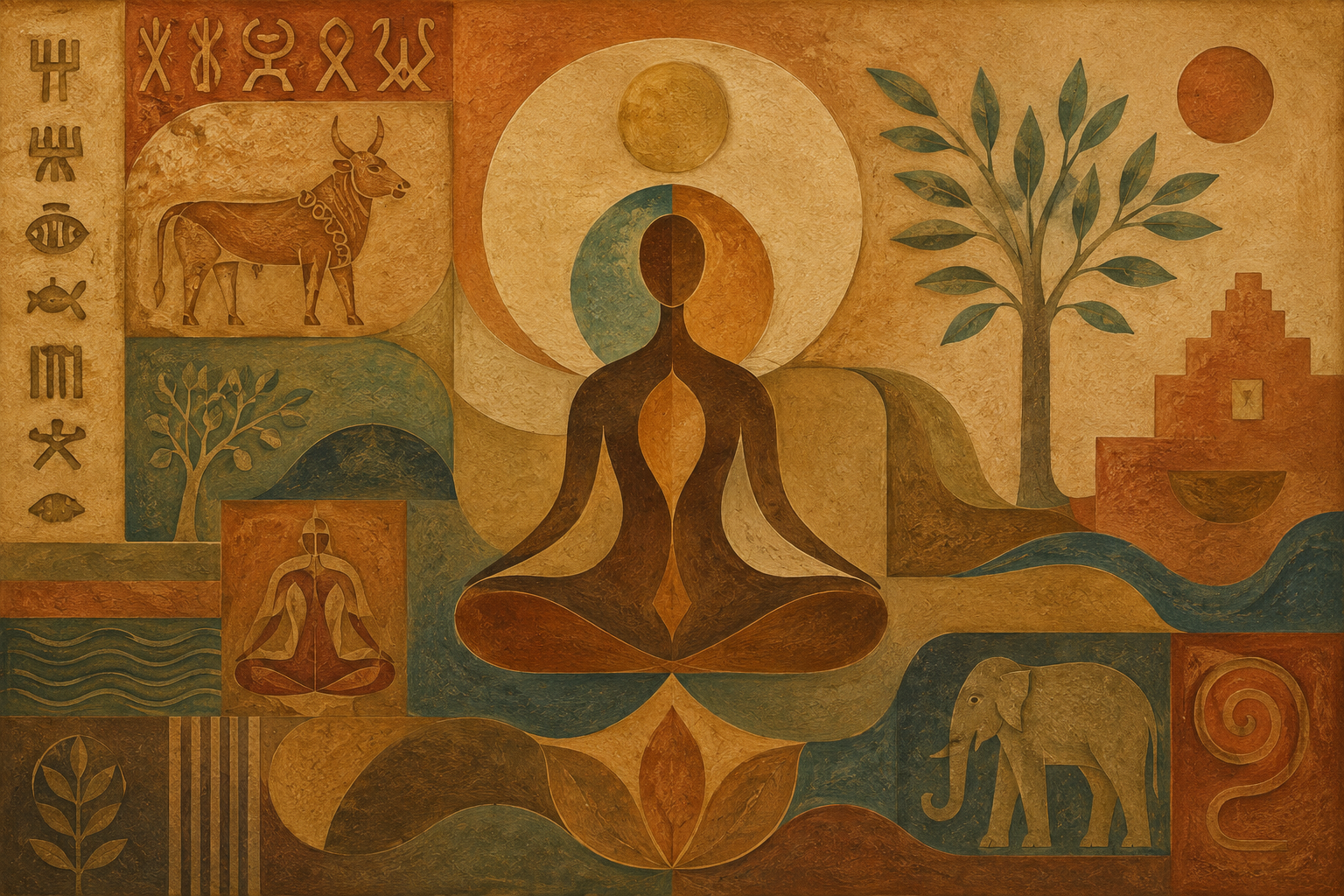
Yoga has traveled a long road — from the meditation halls and forest hermitages of ancient India to the studios, living rooms, and office breakrooms of the modern world. Along the way, it has kept something remarkable intact: a practical system for cultivating wellbeing that touches every layer of human experience. Yoga isn't just stretching, and it isn't just relaxation. At its best, it's a discipline that works on the body, steadies the mind, and, for many practitioners, opens a door to something deeper — a sense of connection that goes by many names: spirit, soul, or simply presence.
This post looks at yoga's benefits across three dimensions that have always been intertwined in the tradition itself: the physical, the mental, and the spiritual.
Body: Strength, Flexibility, and Resilience
The physical benefits of yoga are the ones most people notice first, and for good reason — they tend to show up quickly.
Flexibility and mobility. Regular practice gently lengthens muscles and loosens joints that stiffen from long hours of sitting or repetitive movement. Over weeks and months, postures that once felt impossible become accessible, and everyday movements — bending, reaching, turning — get easier and more comfortable.
Strength and balance. Many yoga postures ask the body to support its own weight in new ways. Holding a plank, balancing on one leg, or moving slowly through a sequence builds functional strength — the kind that supports daily movement rather than just looking good in a mirror. Balance work also sharpens proprioception, the body's sense of where it is in space, which becomes increasingly valuable with age.
Breathing and cardiovascular health. Pranayama, the yogic science of breath control, trains the respiratory system to work more efficiently. Slower, deeper breathing patterns have been linked to lower blood pressure and reduced heart rate, giving the cardiovascular system a quieter baseline to operate from.
Pain management and recovery. Yoga is increasingly used alongside conventional care for chronic back pain, arthritis, and recovery from injury. Its low-impact nature makes it accessible to bodies that might struggle with higher-intensity exercise, while still offering a genuine strength and mobility stimulus.
Mind: Clarity, Calm, and Focus
If the body is where yoga's benefits are first felt, the mind is often where they matter most.
Stress reduction. The combination of movement, breath, and attention activates the parasympathetic nervous system — the body's "rest and digest" mode — countering the chronic low-grade stress response so common in modern life. Cortisol levels, the body's primary stress hormone, tend to drop with consistent practice.
Improved focus and mental clarity. Yoga asks practitioners to hold attention on breath, alignment, and sensation for sustained periods. This is, in effect, a training ground for concentration. Many people find that this capacity to return attention to one thing, again and again, carries over into work, study, and daily decision-making.
Emotional regulation. By linking breath to movement, yoga offers a built-in tool for managing difficult emotions in real time. A racing mind or a flash of irritation can be met with a few slow, deliberate breaths — a skill that, once practiced on the mat, becomes available anywhere.
Better sleep. The nervous-system-calming effects of yoga, particularly restorative and evening practices, are associated with falling asleep more easily and experiencing deeper, more restful sleep.
Soul: Presence, Meaning, and Connection
The word "yoga" itself comes from a Sanskrit root meaning "to yoke" or "to unite" — and it's this dimension that separates yoga from ordinary exercise.
A sense of presence. Yoga is one of the few modern practices that insists, structurally, on being done in the present moment. You cannot do tomorrow's posture today. This built-in demand for presence is, for many practitioners, the closest thing to meditation they experience in an otherwise distracted day.
Self-awareness. The slow, attentive nature of practice creates space to notice habitual patterns — physical tension held in the shoulders, a tendency to rush, a resistance to stillness — that often go unnoticed in daily life. This kind of self-observation is frequently the first step toward meaningful change.
Connection to something larger. Whether understood in explicitly spiritual terms or simply as a feeling of being part of something bigger than the day's to-do list, many long-term practitioners describe a quiet sense of connection that deepens over years of practice — to their own bodies, to other people, or to a broader sense of meaning.
A steadying philosophy. Beyond the postures, yoga carries with it an entire contemplative tradition — ideas about attention, non-attachment, and steadiness of mind — that practitioners can draw on well beyond the time spent on the mat.
Bringing It Together
What makes yoga distinctive isn't that it offers physical benefits, or mental benefits, or spiritual benefits — it's that it offers all three through the same simple, repeatable practice. A single session might loosen tight hips, quiet a racing mind, and leave a lingering sense of calm that lasts into the evening. Few practices manage to work on so many levels at once, which may be the real reason yoga has endured for thousands of years and shows no sign of fading now.
Whether you're drawn to the mat for a stronger back, a quieter mind, or something harder to name, the practice tends to meet you where you are — and, with time, to offer a little more than you came looking for.